One object.
Many useful views.
Separate the model from its presentation. Document state and selection do not depend on a particular window or camera. An application can choose its workspace without rewriting the object it edits.
A GPU-accelerated application framework with a coherent desktop at heart. Native windows, useful objects, and tools that feel like they belong together.
Rust + Bevy underneath. A cross-platform future ahead. Desktop, window manager and OS appliance in development.
The computer should make sense at both levels. Underneath, explicit state, commands, and systems give the engine room to organize work efficiently. On screen, documents are documents, tools are tools, and windows belong to the work you’re doing.
PlatinumSDK connects those two ideas: a modern Rust and Bevy foundation with the legibility of a classic desktop. Build an application today, without giving up a larger vision of applications that cooperate.
Separate the model from its presentation. Document state and selection do not depend on a particular window or camera. An application can choose its workspace without rewriting the object it edits.
GPU-backed presentation, cached text shaping and page layout, offscreen culling, and background recovery keep repeated work out of the interactive path.
Cross-platform support stays central. Native host adapters and a browser canvas share the SDK. The future OS appliance is one deployment of that idea, alongside applications on existing operating systems.
A document doesn’t need to trap every tool inside its frame. In native Platinum Write, documents, toolbars, and formatting palettes can live in separate host windows. Put them where the work makes sense. Float them or dock them.
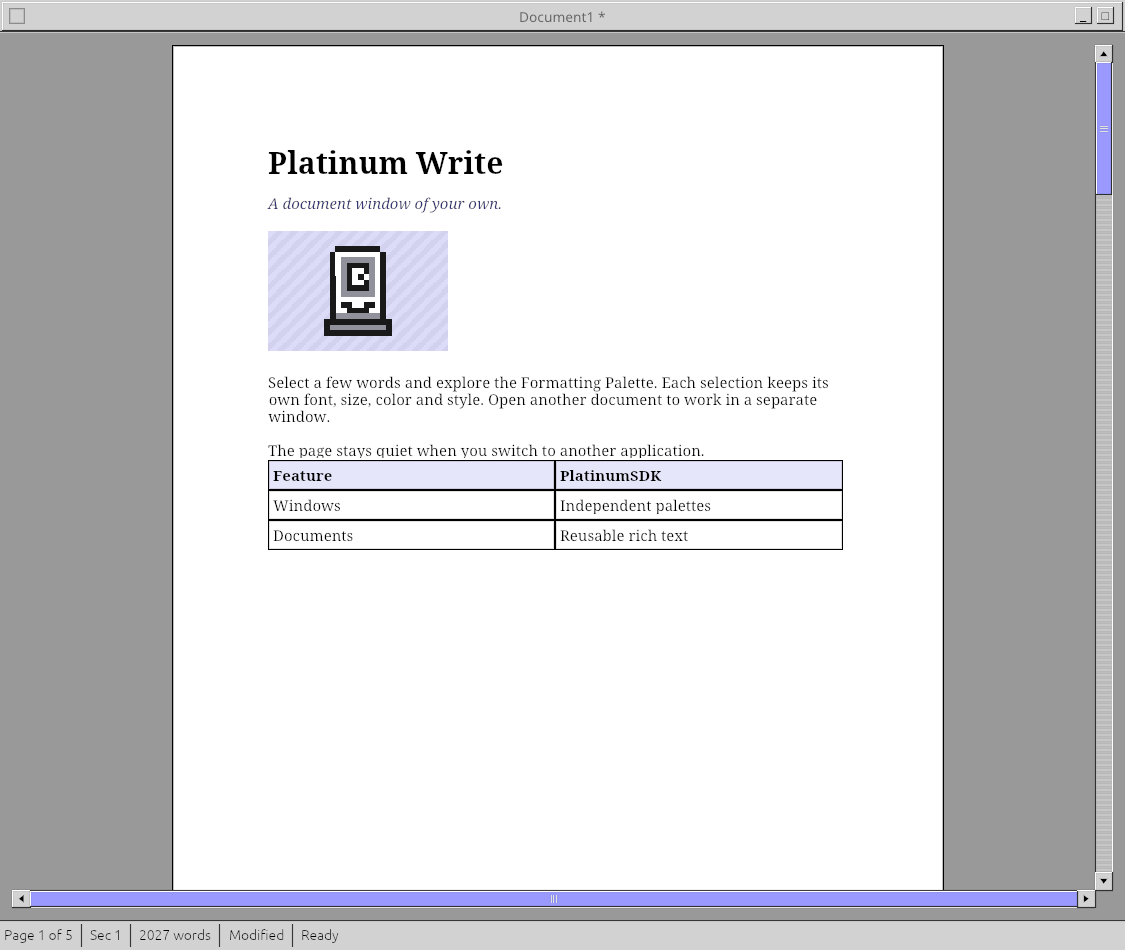

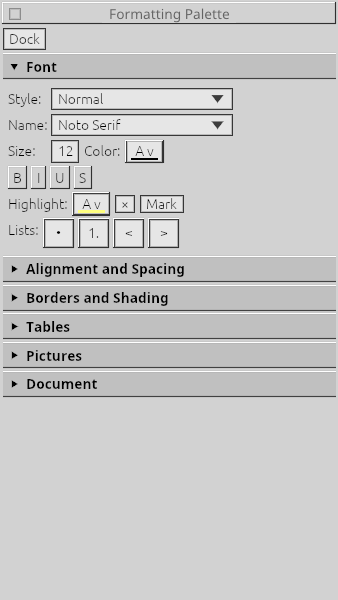
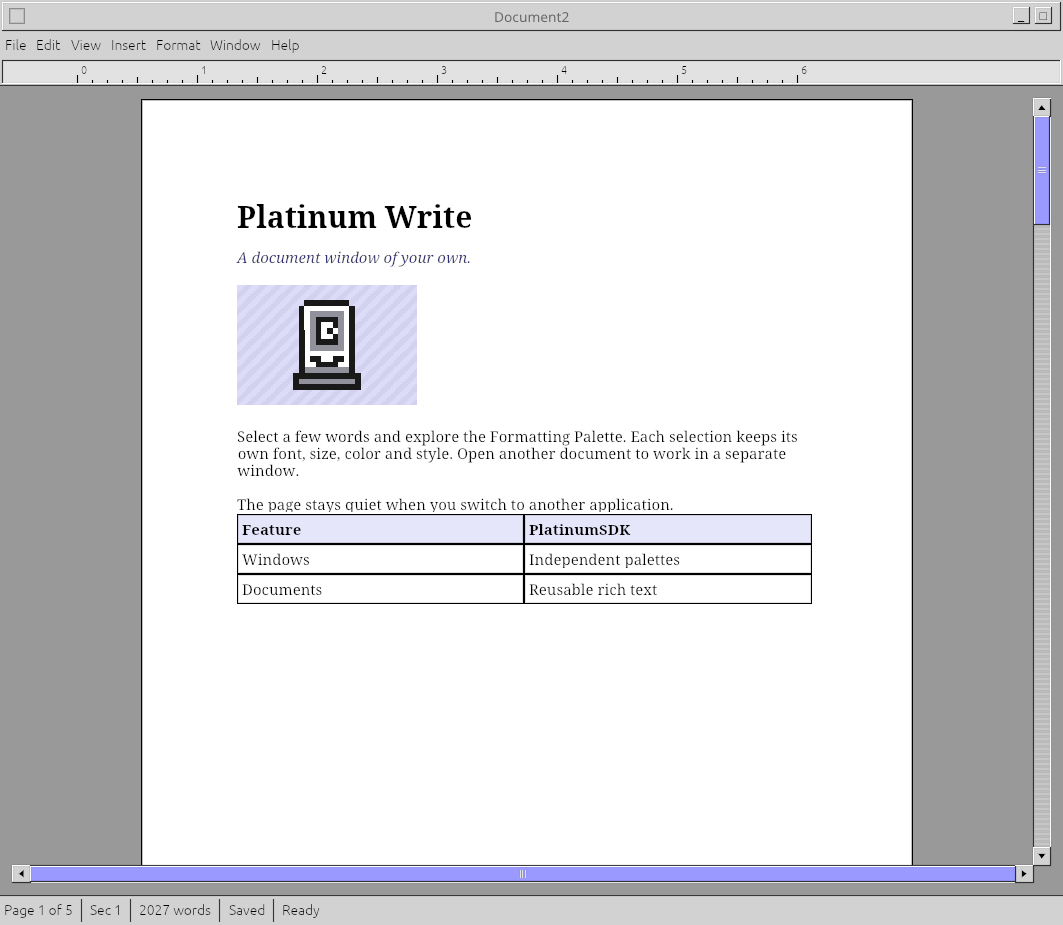
This is actual native application behavior. Platinum Write’s browser build uses a shared canvas and tabs to fit the browser host.
Draw an animation. Build a game. Cut a video. Make a world. Or write an application of your own. Platinum is about keeping that first step small and letting your ideas get bigger.
We miss the approachable tools that made the 90s desktop feel like a place to experiment. Too many were bought, buried, or pulled away from the people who loved using them. We want to pick up that creative thread: familiar controls, useful objects, and room to learn by making.
The application family is one expression of PlatinumSDK, not its limit. The same Rust and Bevy foundation can support your own compatible applications: document tools, editors, visual workspaces, utilities, or something we haven’t thought of. Shared editor components and application workspaces exist today; a broader ecosystem of cooperating objects and live cross-application views is being built toward.
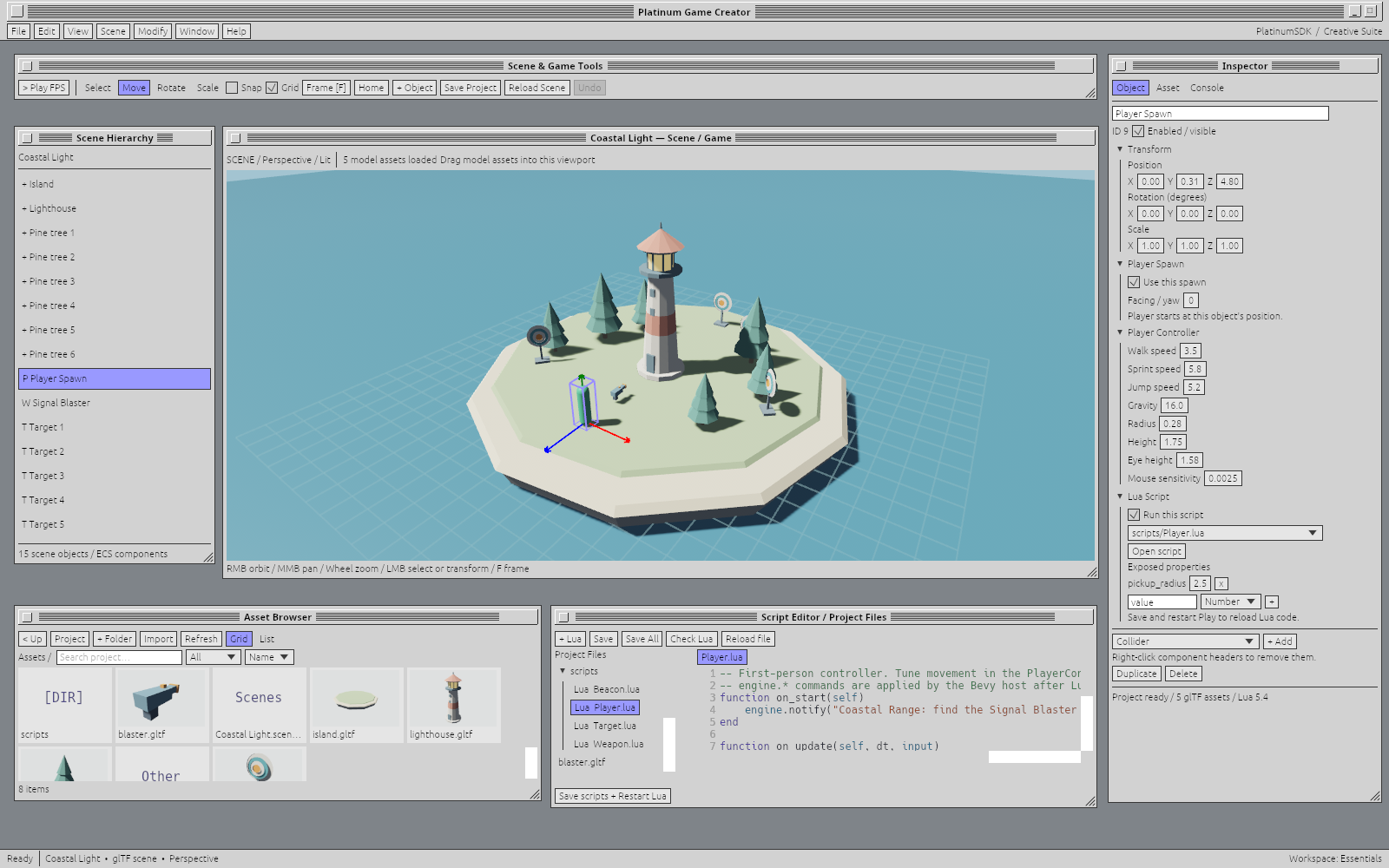
A welcoming 2D and 3D game-making workspace built toward Rust and Bevy: scene tools, reusable objects, intuitive Lua scripting, classic CSG level editing, native code, and a Fusion-style event table. Start small. Build a world of your own.
Explore Platinum Game Creator ↗The SDK is the working foundation. The following capabilities describe the desktop and OS direction under development, rather than features delivered by the current Write build.
A Bevy-powered desktop can bring 3D graphics directly into everyday computing: spatial views, interactive previews, and application surfaces composed together. The goal is useful continuity between a document, a model, and the world it describes.
Typed, capability-scoped IPC is the proposed connective tissue between separate application processes. Give another tool access to a resource or operation, rather than repeatedly flattening work into an exported file. Cooperation should be explicit, inspectable, and permissioned.
The ambition is always-live views of shared resources: change the underlying object and let connected applications reflect it in real time. A preview, an inspector, and an editor should be different ways into the same work.
A Haiku-inspired approach to metadata and queries, extended toward a relational database file-system layer. Connect documents, assets, tools, and projects through meaningful relationships, with live queries alongside familiar files and folders.
A thin Linux foundation handles hardware, processes and resource enforcement. A Plan 9-inspired namespace model gives each app its own state, granted files and explicit services. Individually supervised applications remain separate from the desktop process.
Windows native captures and a working browser build are available today. The architecture targets native Windows, macOS and Linux hosts; broader platform acceptance, desktop cooperation, the window manager and the bootable appliance remain ongoing work. No finished OS download or release date is announced.
Talk to Winnitude! about custom applications, developer tools, and real-time interfaces.
Discuss a project