An open world should hold up where people actually play. The latest Toronto street study, built through our city-production workflow.
AVAILABLE NOW / A SERVICE FOR YOUR TEAM
We build the city. You build the game.
Bring us any real-world location and the engine you work in. Digital Cities combines our internal generation tools with environment art and engineering to deliver high-quality, performant, game-ready open worlds on a fast production schedule.
From a district to a larger city, we scope the work around the places that matter to your game. Detail, collision, navigation, streaming and asset delivery follow the target platform and agreed performance budget. You get a usable world and a practical handoff, with room for your own art direction and gameplay.
Our proprietary internal tooling is also becoming a product. The Digital Cities software is being built to automate the majority of the repeatable work behind this workflow: geographic preparation, scene assembly, reusable asset placement and iteration.
Keep the decisions that define your world. Let the tools carry more of the repetitive production. The service is available today; the standalone automation product is coming soon.
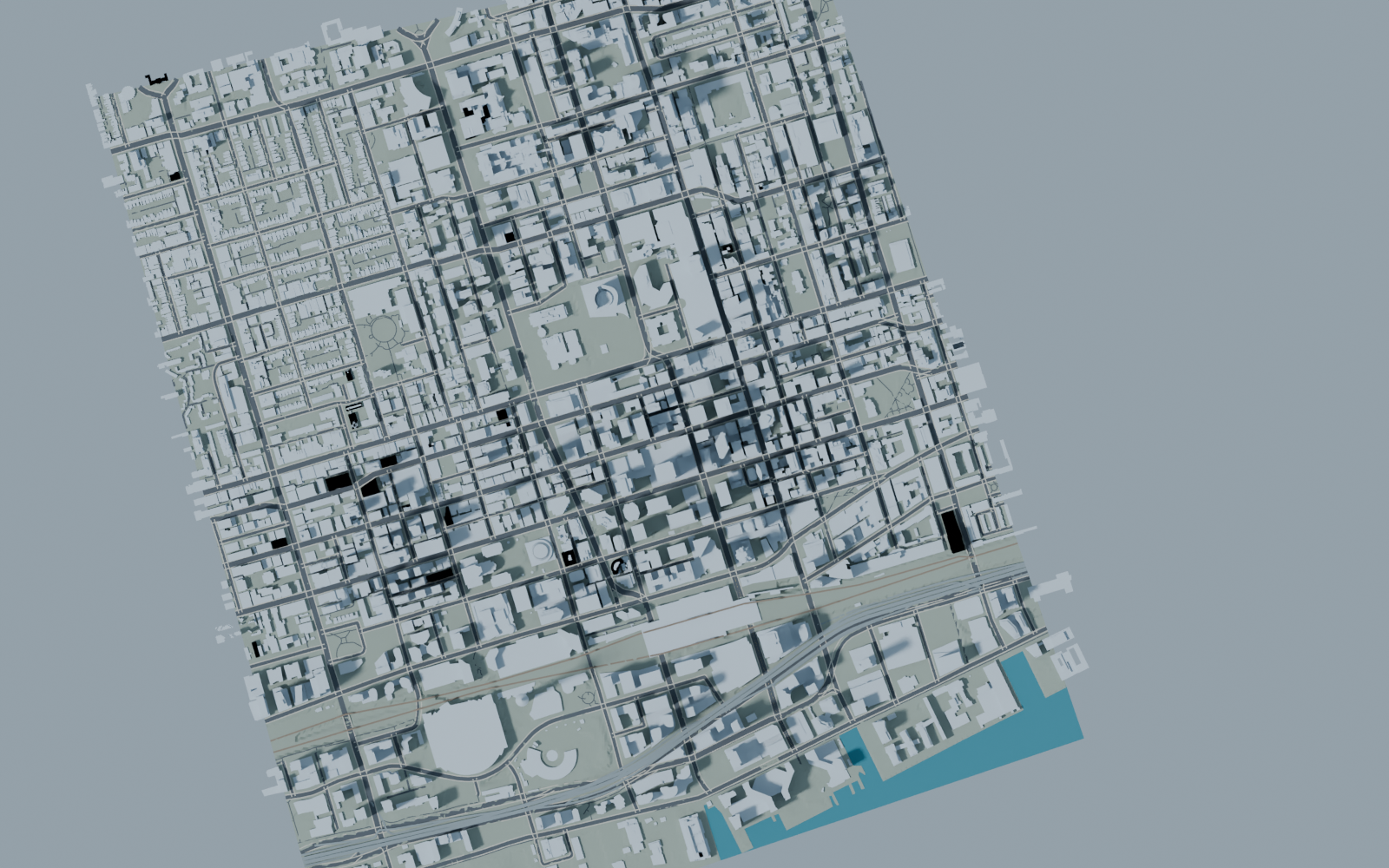
Older source views and the wider skyline show how the foundation becomes an authored environment. The closeups show where that work leads.
STAGE / 01
Start with your real location.
Choose the area and target engine. We define coverage, references, detail priorities, gameplay requirements and the performance budget before production begins.
TORONTO / THE PLACES BETWEEN THE BIG MOMENTS
Get down to the street.
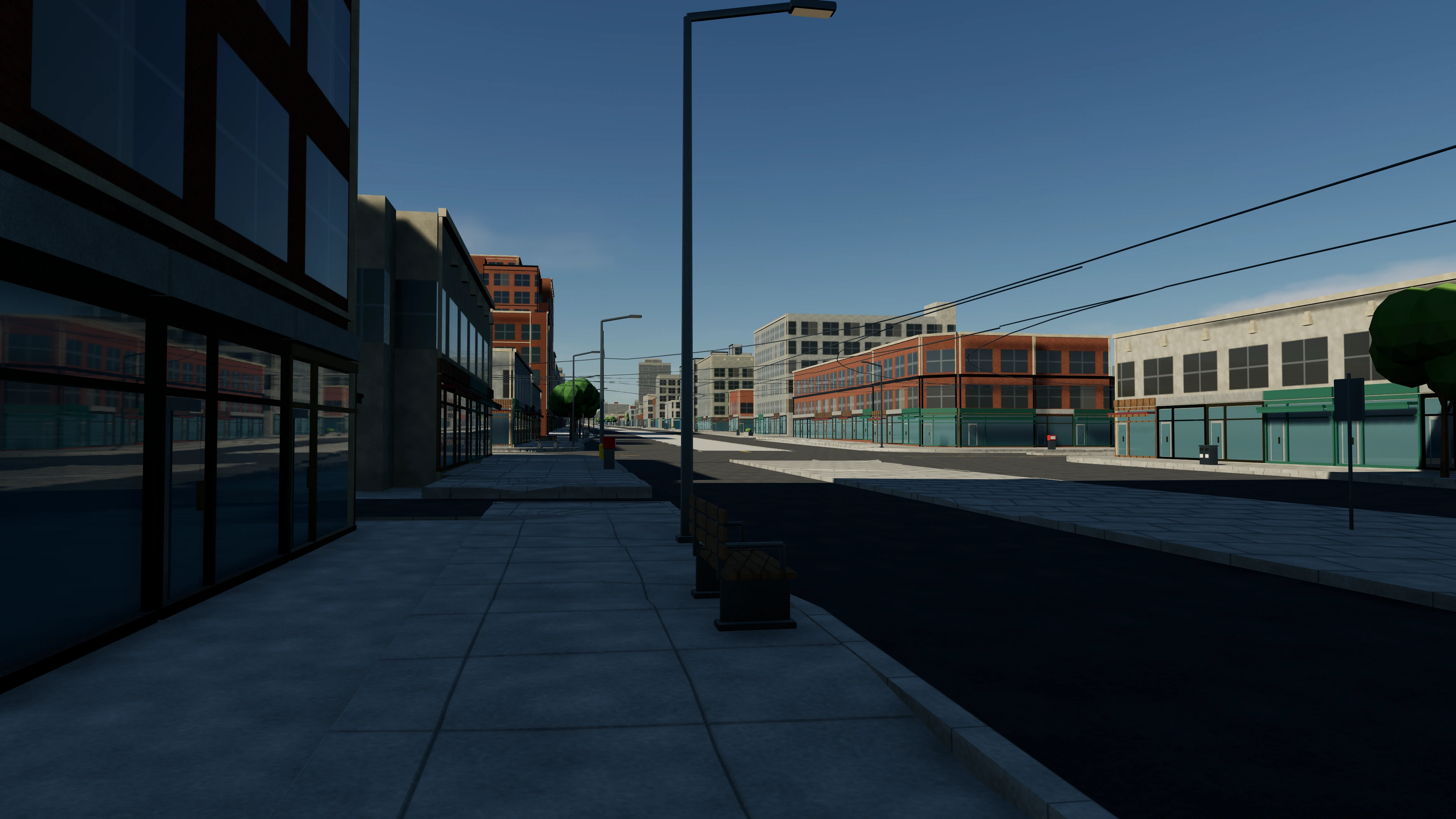
The strongest test of a city is the view from inside it. Explore street-level areas, landmarks and the waterfront from the latest 4K Toronto Epic captures, with storefronts, surfaces, landmarks and lighting that give each place its character.
Storefronts, paving, trees, seating, lighting and overhead wires turn a street layout into an environment at the scale of the player.
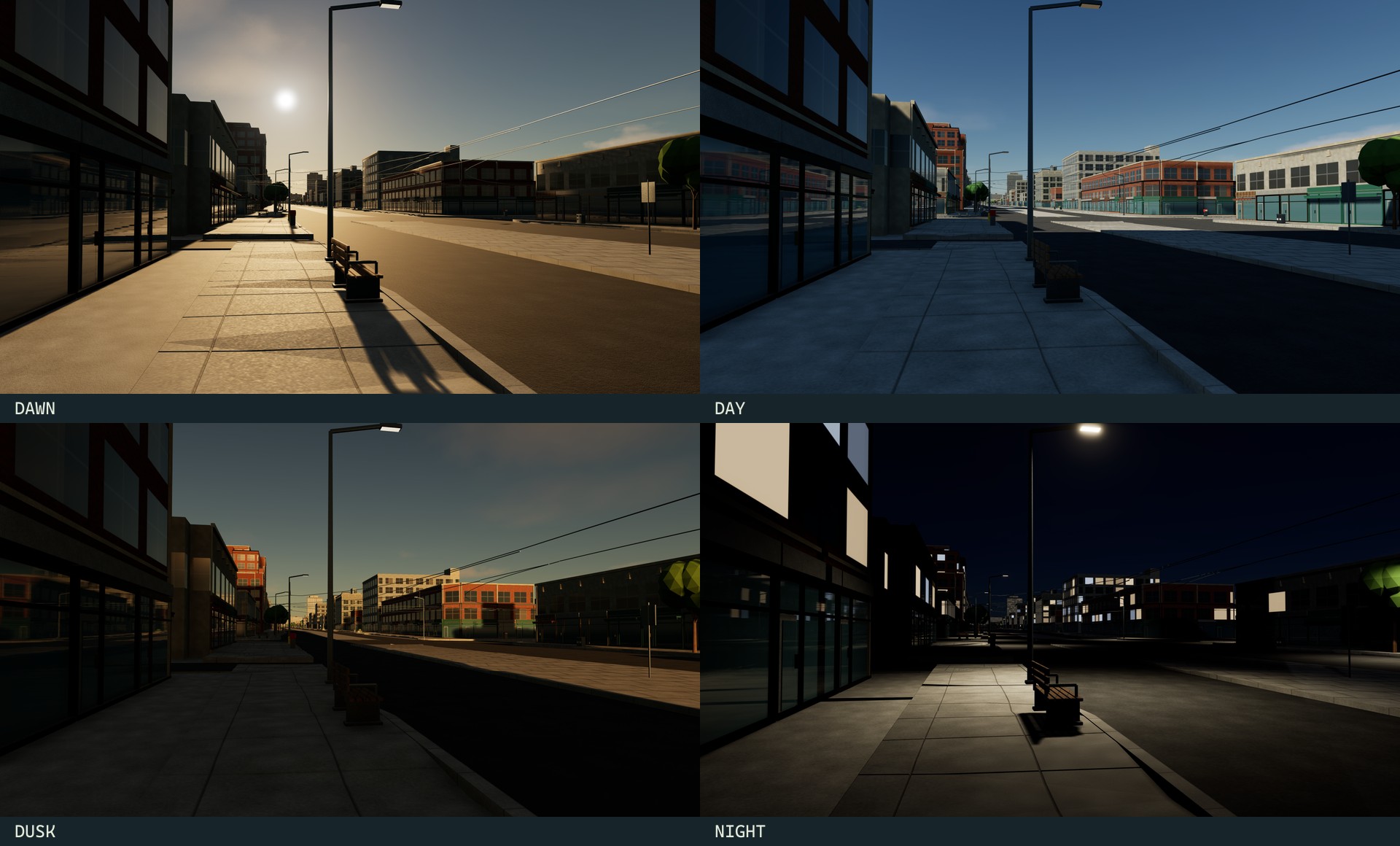
THE SAME PLACE / A DIFFERENT HOUR
Build the place. Set the atmosphere.
From a bright working street to a quiet evening corner. Compare dawn, day, dusk and night from the same camera, all captured at 4K with Epic settings. Materials, light and street detail work together to give the world a sense of time.
Matched Epic-mode captures from the latest Toronto presentation. Open the sheet to compare the lighting at full size.
A WORLD YOUR TEAM CAN KEEP WORKING ON
Performance, authorship and a useful handoff.
ENGINE FIT
Built for your pipeline.
Engine, asset formats, coordinate conventions and runtime requirements are part of the brief, rather than an afterthought.
PERFORMANCE
Detail where it earns its place.
Shared asset families, sensible material use and an agreed runtime budget shape the production. Review the city on the hardware and routes that matter.
AUTHORSHIP
Your changes have a home.
Keep deliberate replacements and corrections attached to generated content, so iteration does not mean starting the art pass again.
OWNERSHIP
Know what you are getting.
Source data, inferred detail and authored work stay distinguishable. Delivery conventions and documentation make the next production step clear.
TORONTO PILOT / SOURCE NOTES
The Toronto captures show our current reference-guided environment work. Landmarks have not yet been verified as one-to-one architectural matches; generated, inferred and authored detail are combined. Distant lake continuation and atmospheric haze provide presentation context beyond the measured extent. These are Epic-setting environment captures, rather than hardware performance benchmarks.
Send the location, intended engine, target platforms and the kind of game you are making. We will work out the scope, schedule and first useful delivery together.